 +86 18805063850
 allen@crtopmachine.com
With the rapid development of additive manufacturing, many companies ask the same question before starting a new project: Is 3D printing cheaper than injection molding?
The answer is not simply “yes” or “no.” It depends on production volume, material requirements, part complexity, and long-term manufacturing goals.
Cost Comparison: Low Volume vs. Mass Production
For low-volume production, prototyping, or customized parts, 3D printing is often cheaper. It requires no molds, no tooling investment, and minimal setup time. A digital file can be printed directly, making it ideal for early-stage product development, functional testing, and small batches (typically under a few hundred parts).
Injection molding, on the other hand, involves higher upfront costs due to mold design and fabrication. A steel or aluminum mold can cost thousands—or even tens of thousands—of dollars depending on complexity. For very small quantities, this initial investment makes injection molding less economical.
However, the situation changes dramatically when production volume increases.
Cost Efficiency at Scale
Once production reaches hundreds or thousands of units, injection molding becomes significantly more cost-effective. The cost per part drops sharply because the mold cost is distributed across a large number of products. Injection molding also offers faster cycle times, lower material waste, and consistent quality.
In contrast, 3D printing has a relatively fixed cost per part, meaning each unit takes time and material regardless of quantity. For mass production, this results in much higher overall costs compared to injection molding.
Material, Strength, and Quality Considerations
Injection molding supports a wider range of engineering-grade thermoplastics such as PP, ABS, PC, PA, PET, and reinforced composites. These materials provide superior mechanical strength, surface finish, and long-term durability.
While 3D printing materials continue to improve, many printed parts still fall short in terms of isotropic strength, heat resistance, and surface consistency—especially for industrial or consumer-grade applications.
Why Injection Molding Machines from CRTOP Make a Difference
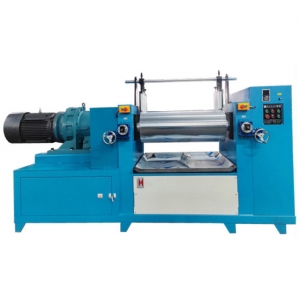
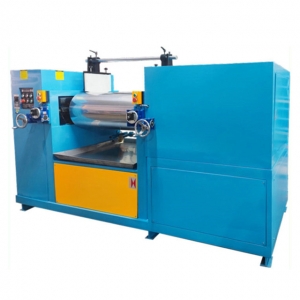
Crtop injection molding machines are designed to help manufacturers transition smoothly from prototyping to scalable production. With compact lab-scale models and industrial-capacity systems, Crtop offers:
Stable and precise injection control
Compatibility with a wide range of thermoplastics
Energy-efficient designs
CE-certified safety and reliable performance


